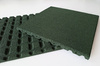
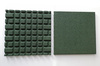
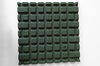

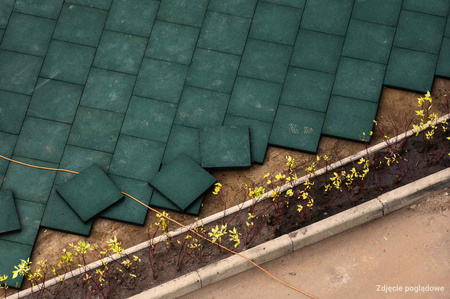
Gumowa płyta chodnikowa zielona / 25 mm / 0,5x0,5m / SCP Select
- Material: SBR rubber granulate + polyurethane binder Thickness: 25 mm Width: 0,5 m Lenght: 0,5 m
Subscription products in your shopping cart
Set one delivery frequency for all subscription products in your cart every:
Subscription products in your shopping cart
Green rubber walkway / terrace tile – elastic regranulate surface
The SCP Select rubber walkway tile (also referred to as a terrace tile) is a prefabricated surface element made from SBR rubber regranulate bonded with a polyurethane binder. The tile is 25 mm ± 2 mm thick and is available in 0.5 × 0.5 m (approx. 4 kg) and 1 × 1 m (approx. 17 kg) formats, in black, green or red. The material operates in a typical temperature range from −20 to +70 °C, maintaining elasticity, abrasion resistance and good dimensional stability.
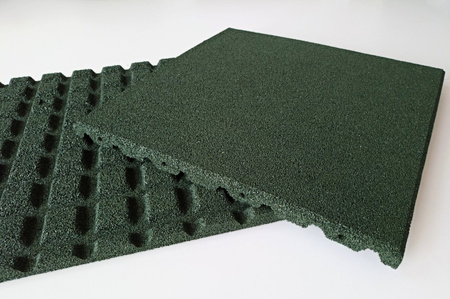
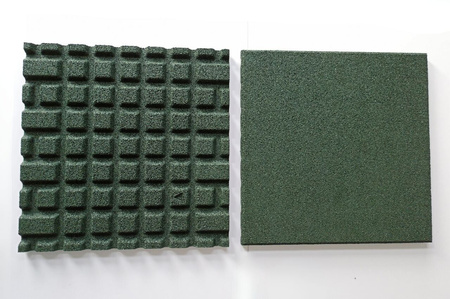
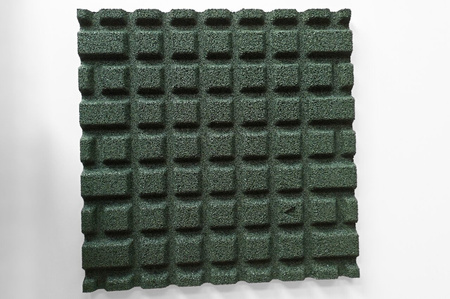
The top surface of the tile is flat and anti‑slip, while the chamfered edges help drain water away from the surface, which is important on terraces, paths and access routes around buildings. The underside has a ribbed “chocolate bar” structure – this design prevents the tile from warping under changing weather conditions, helps it retain an even surface over time and reduces movement on sand or other permeable bedding layers.
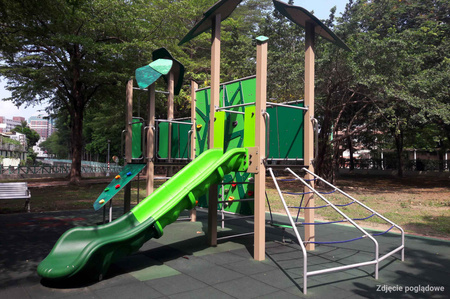
Walkway tiles made from regranulate are suitable as a surface for terraces, balconies, entrance areas, garden paths and pedestrian routes, as well as a protective layer in technical zones and around sports facilities. The elastic rubber regranulate cushions footsteps, dampens noise and reduces the risk of slipping, while at the same time protecting the substrate (e.g. waterproofing, concrete, tiles) from mechanical damage. Thanks to their prefabricated dimensions, installation is quick – the tiles can be laid on a stable, level sub‑base and connected with plastic dowels, without the need for permanent bonding to the substrate, which makes removal or relocation of the surface easier.
Terrace tiles made from regranulate are weather‑resistant and comply with current environmental regulations, without containing substances classified as hazardous. For transport, they only require protection against mechanical damage, and for storage they should be kept in dry, well‑ventilated areas, away from heat sources and direct exposure to weather, ensuring that their technical properties are maintained throughout their service life.


